








Boeing 787 Dreamliner Finally Takes to The Skies
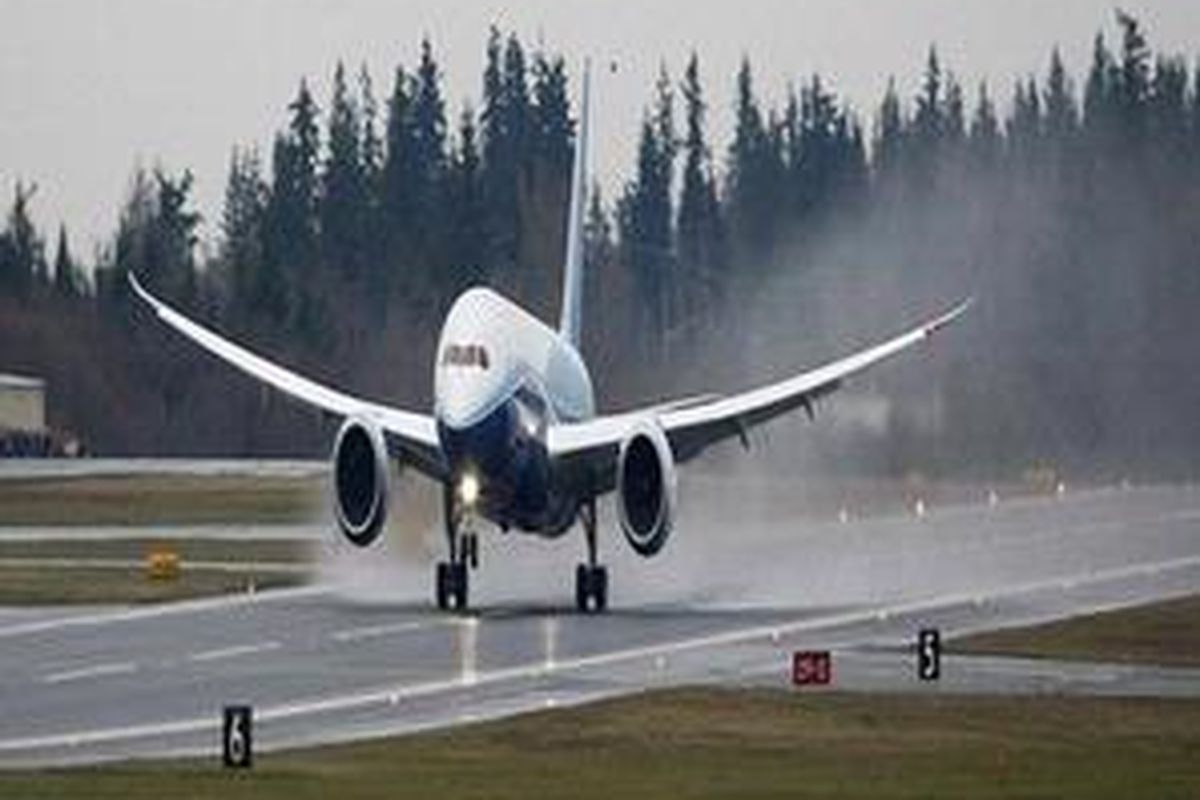


KOMPAS.com - Boeing made the first successful test flight of its 787 Dreamliner yesterday, almost two and a half years after the new, fuel-efficient plane was supposed to fly.
The lightweight carbon and titanium plane, promising to save airlines million of dollars in fuel and maintenance costs, has been hampered by a shortage of bolts, faulty design and a two-month strike.
But today Boeing sent the plane on a four-hour flight from Paine Field in Everett, Washington, at 10am local time, to test it as it flew around the local area.
Boeing employees cheered as pilots Michael Carriker and Randall Neville ensured the plane had a successful take-off.
Today's test was just the first in a series of checks which will be completed on six 787s over the next nine months in order to obtain the necessary Federal Aviation Administration certification.
Boeing executives say the tests, which will see the planes running around the clock, will be like 'running a small airline'.
Tests will include practising mid-air stalls, dives and steep banks, as well as seeing how the plane copes in extremes of heat and cold.
However, experts insist the Dreamliner still has 'a long way to go' before it proves to be a success.
Richard Aboulafia, aerospace analyst at research firm Teal Group, said: 'The first flight will provide a badly needed perception that the programme is on some kind of schedule again.
'But it's still a long way from the ultimate result.'
The Dreamliner has proved very popular with airlines, who like the concept of a mid-sized plane being able to carry over 250 people for very long distances.
Since work began on the plane in 2004, airlines have ordered 840 of the aircraft - making $140billion for Boeing. However, the five production delays over the past three years and the six postponements of the first flight have stretched customers' patience.
The company has had problems with the new materials used, as well as delays stemming from shortage of parts and the difficulties of bringing together fuselage and wing structures from Japan, Italy and elsewhere in the U.S.
In the meantime, rival Airbus, a unit of Europe's EADS, has been attracting buyers with its competing A350 plane, which will also be made primarily from carbon-composite materials.
Analysts say Boeing have already invested more than $10 billion in the project, but will have to pay some sort of compensation to customers for late planes.
Boeing are estimating that the first 787 Dreamliner will be delivered to Japan's All Nippon Airways late next year - more than two years after the original target of May 2008.
But the revolutionary use of carbon fibre in the planes, and the problems of joining it to other materials mean there is still plenty of risk that Boeing's new plane will hit new snags in the air.
Mr Aboulafia added: 'Just as Boeing found hurdles on the way to first flight, they are going to find hurdles on the way to certification.'
However, Howard Wheeldon, transport analyst with BGC Partners, is enthusiastic about the significance of the test flight.
He describes the Dreamliner as revolutionary, telling the BBC World Service that the project will reshape the aviation industry.
'This is an aircraft that changes the whole basis of flying, because of the equipment onboard,' he says.
'In terms of the cost of operation, this is an 80 per cent composite material aircraft, with 35 tons of carbon-fibre reinforced plastic, so it is a light aircraft - which means it burns less fuel.'
KOMPAS.com berkomitmen memberikan fakta jernih, tepercaya, dan berimbang. Dukung keberlanjutan jurnalisme jernih dan nikmati kenyamanan baca tanpa iklan melalui Membership. Gabung KOMPAS.com Plus sekarang