








Greens Fear Indonesia Forest Loss for Food Estate
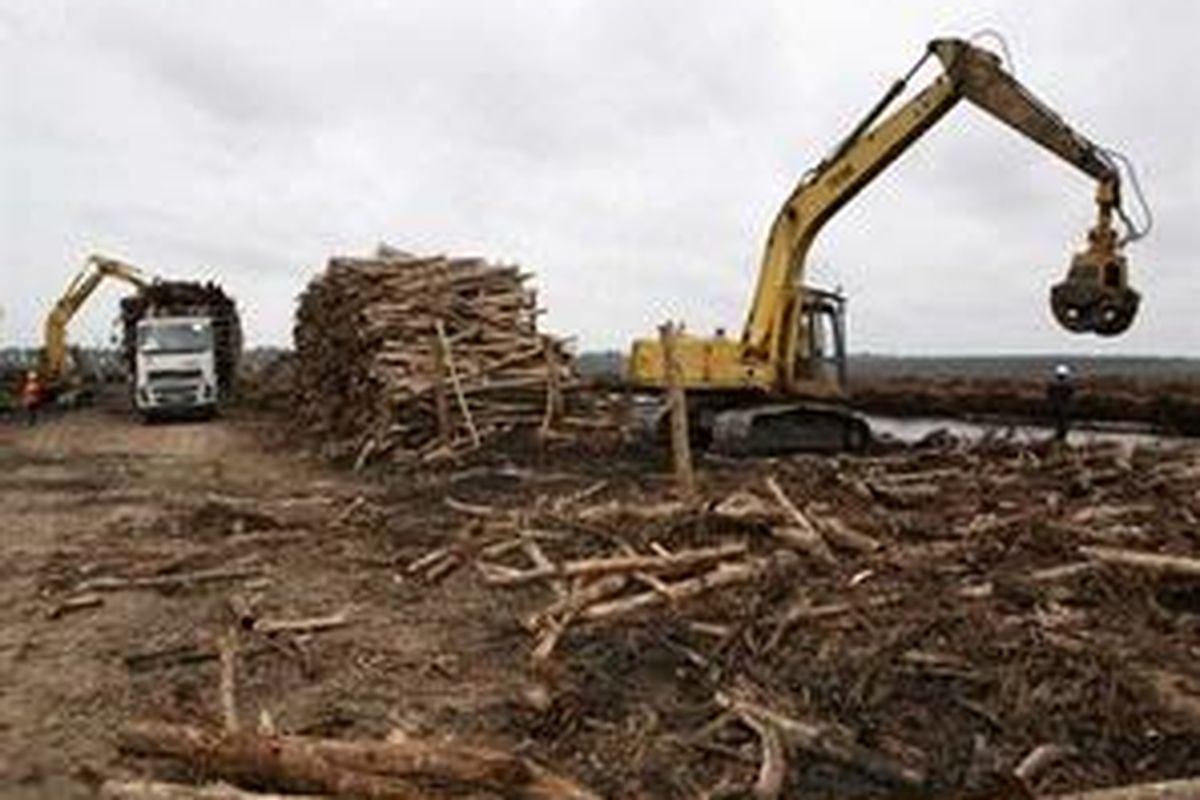


JAKARTA, KOMPAS.com - Indonesia would have to clear about 700,000 hectares of forest, an area 10 times the size of Singapore, if it proceeds with plans for a vast agricultural estate in Papua province, an activist group said on Thursday. Indonesia wants to develop the 1.2 million hectare (3 million acres) food estate in the Papua district of Merauke, the eastern-most part of Indonesia, to shore up supplies of rice, sugar, corn, soybean and beef and ensure more stable food prices.
The country has a rapidly growing population estimated at 240 million and wants to avoid rising food import bills. The government is trying to use more land for agricultural purposes to be self-sufficient.
The government previously said that unforested scrubland in areas classified as production forest would be used to develop the estate. But a Jakarta-based environmental NGO, Greenomics, said huge swathes of healthy Papua forest would need to be cleared to develop a food estate of that size.
Using satellite images and data from the ministry of environment and the ministry of forestry, Greenomics has calculated that Merauke has only 505,945 hectares of unforested scrubland in areas classified as production forest.
“That amount is far from the development target,” said Greenomics executive director Elfian Effendi. “If they have to cut down this much forest, this is not consistent with the Indonesian government’s plan to not convert natural forests in Merauke.” Under Indonesian law, there are different categories of forest and that some areas classified as production forest are in fact idle scrubland.
But Effendi said even if all the idle scrubland in Merauke’s production forest was used, the government would still need more land to develop the food estate, suggesting that healthy forest would have to be cut down.
Green lungs
Several investors have already joined the Merauke food estate project including PT Medco Energy International Tbk, PT Bangun Cipta, PT Wilmar International, and PT Industri Gula Nusantara, according to the Indonesian government’s State Secretariat website. Indonesia has vowed to cut its greenhouse gas emissions by 26 percent from business as usual levels by 2020, or 41 percent by 2020 if international funding is made available.
Forest preservation is seen as crucial to slowing dangerous global warming because trees absorb large amounts of the greenhouse gas carbon dioxide, which is emitted when fossil fuels are burned or forests are cleared. Indonesia’s tropical forests, along with those in the Amazon Basin and equatorial Africa, act like “lungs of the planet” but its deforestation rate is among the highest in the world.
Effendi said the Merauke food estate “was really an issue about carbon emissions”. He also warned that the large numbers of farm workers that would need to be transported — most probably from the majority Muslim island of Java — to predominantly Christian Merauke could create social conflict.
“It would mean a sudden concentration of foreign workers in one area and could mean the local people are marginalised,” he said. Masnellyarti Hilman, a deputy environment minister, said the environment ministry would meet Greenomics next week to discuss their findings.
“I cannot tell you right now if their assessment is right or wrong because I do not have the detail of their study, but they used our data so we have to consider it,” she told Reuters by phone.
KOMPAS.com berkomitmen memberikan fakta jernih, tepercaya, dan berimbang. Dukung keberlanjutan jurnalisme jernih dan nikmati kenyamanan baca tanpa iklan melalui Membership. Gabung KOMPAS.com Plus sekarang




