








Facebook's New Look to Combat Google


KOMPAS.com - Facebook has today launched a significant privacy-led revamp of the social networking site in a move that's being interpreted as a direct response to the threat posed by Google+.
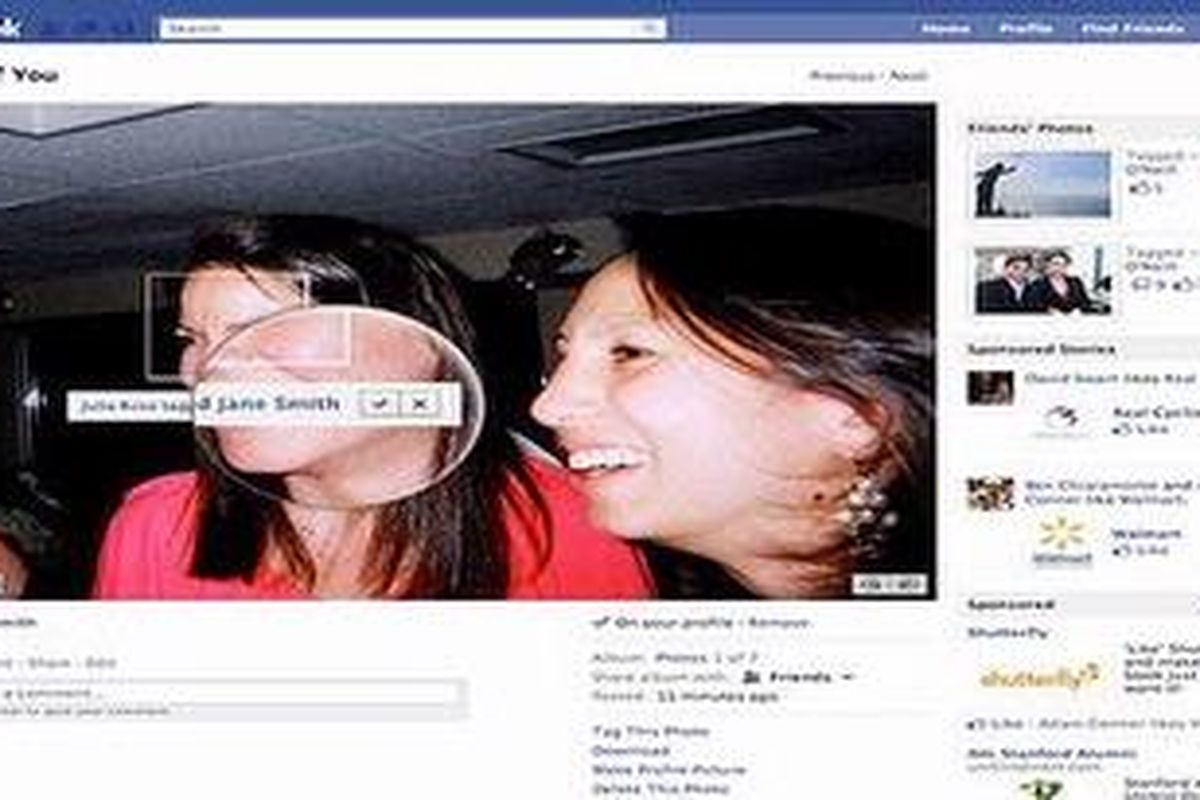
The site said the changes, designed to make it easier for users to control what personal details are revealed on the site and to whom, would be rolled out to users "in the coming days". Rectifying a major privacy flaw, Facebook users can now approve photos they are tagged in before they appear on their profile
Google+ is still in its early stages - 25 million members at last count compared to Facebook's 750 million - so Facebook isn't in immediate danger but many have remarked about how the Google social network, by grouping friends in "circles", makes it easier to control who you share with.
Tiphereth Gloria, social media strategist at George Patterson Y&R, said Facebook had finally taken onboard criticisms around the clunkiness of its privacy settings.
She said the changes were a way of rectifying some of the privacy issues that resulted from modifications to the Facebook platform including in 2009 which saw much private information become public by default.
"It puts the content sharing or 'publishing' rights back into the hands of the person who's the subject of the content, by removing the rigidity of the platform," she said.
"With Facebook's new share options, many of the privacy concerns reasons to leave Facebook for Google+ have been removed."
The main change revolves around bringing privacy controls out from the cover of the settings pages and placing them next to the posts, photos and tags they affect. Almost all content on your profile will have an icon and a drop-down menu next to it allowing you to manage who can see each specific piece of content.
This is a response to privacy advocates' concerns that privacy settings were too hidden to be effective. Another big change is that users will need to approve or reject any photo or post they are tagged in before it's visible on their profile. You also have the option of approving or rejecting any tag someone tries to add to your photos or posts.
Roger Clarke, who consults on privacy-related issues, worried that users would have to find and enable the ability to approve/reject photos and tags rather than it being switched on by default. Facebook confirmed that users would have to proactively switch on the content tag review.
"You have to discover that a review mechanism exists, and turn it on. So a big proportion of people will continue to suffer the same old problems," said Clarke.
In a nifty feature that was previously hidden away, at the top of user profiles there is now the option to "view profile as", allowing you to see what your profile looks like to anyone on your friends list.
When making new posts, users can now easily select who gets to see them but the feature is somewhat limited in that you can't yet select smaller groups to share with such as specific lists, co-workers or groups you're a member of. Facebook said this was coming "over time".
One new feature that may be controversial is the ability to tag someone in posts or photos even if you're not friends with them on the site. Facebook said this was designed for situations such as when you want to tag a co-worker but don't necessarily want to be their friend - and the site stressed users would still be able to reject any tags.
In other minor changes, users can add locations to any type of Facebook post - not just Places check-ins - while the option to share a post with "everyone" has been renamed to "public".
Gloria said many changes rolled out by Facebook - most recently its facial recognition photo tagging feature - had attracted controversy, and its privacy terms & conditions had been growing exponentially. But she said many of these changes were not driven by Facebook's lackadaisical attitude to privacy but instead the desire of users to share more.
"Rather than the average user seeing the issue of public-private as a dichotomy, it boils down to human behaviour - narcissism, exhibitionism, voyeurism and good old fashioned showing off," she said.
Guy Cranswick, an IT analyst at IBRS, said: "The overall impression is to show it's keeping pace ... Google+ is in the background as a counter threat or force so Facebook must show it's the leader in functionality and tools. Everything Facebook does from now on is to keep the perception riding high."
David Vaile, executive director of the UNSW Cyberspace Law and Policy Centre, said Facebook was in a constant struggle between improving privacy and improving its bottom line by encouraging people to "over-share and not to care about consequences". He called the changes announced today as a "tiny improvement".
"Adding new controls all over the place superificially offers extra choice and control, but as before, there is already too much choice and control for most people to understand, and they tend to overload and give up," said Vaile.
But Vaile welcomed many of the changes including having privacy controls "closer to the place where you need them" and the ability to accept or reject tags. He didn't like that people could now tag those they weren't friends with, however.
"Now if only everything on Facebook was revocable, including your whole profile: at present you would be surprised to find closing the account does not delete the data, it is there if you come back in a year to open a new one," he said.
James Griffin, partner with the social media intelligence firm SR7, said the changes were well overdue and a direct response to growing concerns in the community about cyber-safety.
"Facebook are responding to growing user concerns about who shares what with who and who exactly can access their personal data," he said.
He said the changes would enable people to regain control over their information and avoid sharing all their personal information and friends lists with businesses and government organisations they interact with on Facebook.
"The growing threat of Google+ may well have spurned Facebook into action sooner than we are accustomed to," said Griffin.
Facebook spokeswoman Meredith Chin denied the changes were a response to Google+. "We've been working on these changes for a really long time," she said.
KOMPAS.com berkomitmen memberikan fakta jernih, tepercaya, dan berimbang. Dukung keberlanjutan jurnalisme jernih dan nikmati kenyamanan baca tanpa iklan melalui Membership. Gabung KOMPAS.com Plus sekarang